

Healing in Motion: Horses, Nature, and Art at the Heart of Community


How AHHS Began and why It's a Sanctuary for Both Horses and Humans
People often ask me how Art, Heart, and Hoofbeats Sanctuary (AHHS) began.
As a young girl, I found solace and connection with animals—especially horses. While I struggled with depression, anxiety, and ADHD, horses accepted me just as I was. That unconditional bond brought deep comfort and inspired a lifelong passion for drawing horses. Over time, that passion evolved into a career as a professional artist.
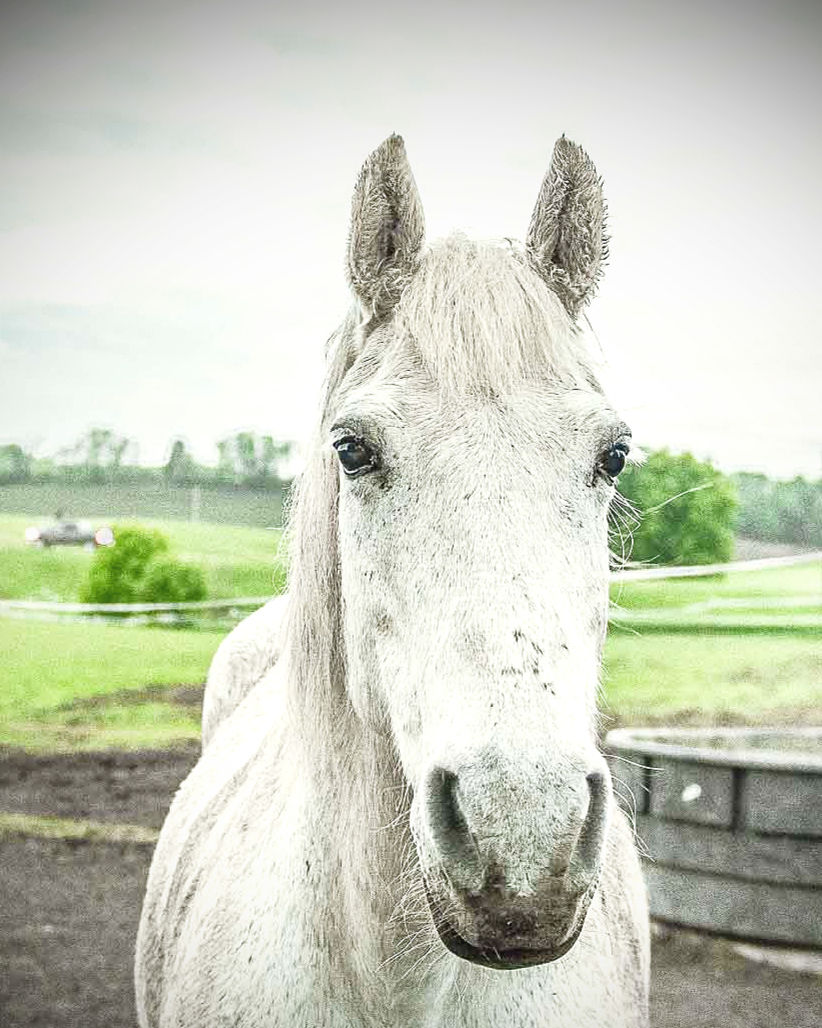
As an adult, I used my creative skills to help others—especially those who are marginalized or living with disabilities—find healing, expression, and empowerment through art. But my love for horses never faded. Years later, I adopted Gershwin, an emaciated gelding sold at auction after being forced into grueling trail rides. I feared he wouldn’t survive, but I poured everything into his recovery. As Gershwin healed, so did I—and I began rescuing other horses at risk of falling into the slaughter pipeline.
Then came 2020. During the pandemic, simply breathing and brushing the horses brought calm and healing—for them and for me. But after COVID, feed costs tripled, and caring for my growing herd became financially unsustainable. I tried to rehome them, but their special needs made that nearly impossible.
Faced with limited options, I took a leap of faith. I founded Art, Heart, and Hoofbeats Sanctuary, believing that time spent with rescue horses could heal people—and that, in turn, a compassionate community could help support the herd.

I brought together my life’s work—as a nationally recognized artist, trauma-informed art educator, and someone who deeply understands horses—to create a place where healing flows in all directions. AHHS became more than a horse rescue. It became a nature-infused sanctuary for human wellness.
It’s a place where people facing isolation, trauma, grief, or disconnection come to find belonging—a herd to care for, and to be cared for in return. At AHHS, humans, horses, and nature come together to foster resilience, reflection, and restoration. Visitors experience creative expression, co-regulation with horses, and a supported environment in which to simply be.
Why Nature, Art, and Horses? Because Healing Happens Best When They Intersect.
Every year, over 180,000 horses in the U.S. become homeless—many ending up in kill pens after careers in racing, showing, or breeding, or simply because they’re no longer wanted (American Wild Horse Campaign, 2023). AHHS raises awareness about their plight while sharing their therapeutic power with the community. We believe healing goes both ways: rescued horses help heal people, and people give horses a second chance at life.
Nature plays a critical role in this process. Research consistently shows that time spent in nature reduces stress, anxiety, and rumination, while improving mood, cognitive function, and resilience (Bratman et al., 2015; Kuo, 2015). AHHS was intentionally designed as a peaceful, outdoor sanctuary—with wooded trails, open pastures, gardens, and quiet spaces to breathe and reconnect. It offers something hard to find in clinical or urban settings: stillness and space to heal.
Art adds another layer of transformation. Engaging in creative expression reduces anxiety and depression, enhances emotional processing, and builds self-worth. Art therapy is especially effective for people experiencing trauma, offering safe, nonverbal ways to reclaim their voice and agency.
A 2010 review by Stuckey & Nobel found that creative visual expression promotes healing by reducing stress and increasing cognitive flexibility.
In 2016, Kaimal et al. found that just 45 minutes of art-making reduced cortisol (a stress hormone) in 75% of participants.
Malchiodi (2013) emphasized how trauma-informed art therapy offers safe outlets for deep emotional work.
Maujean et al. (2014) confirmed that art-based interventions significantly improve well-being in those facing grief, trauma, and isolation.

When combined with equine-assisted therapy—shown to improve emotional regulation, reduce PTSD symptoms, and increase social connectedness (Bachi, 2012; Pendry & Roeter, 2013)—the triad of nature, art, and horses becomes a uniquely powerful model for whole-being wellness.
At AHHS, art isn’t about perfection. It’s about presence, process, and healing. Whether painting a horse’s portrait, walking through the pasture, or simply breathing beside a rescued soul, people find their way back to themselves.
AHHS is not just a sanctuary for horses. It is a sanctuary for people—an open, welcoming space of belonging, creativity, and transformation.
Reflection Question:
Take a Moment Close your eyes. Breathe in gently. Picture a quiet field, the soft breath of a horse beside you, the warmth of the sun on your skin. You are safe. You are seen. You belong.
Reflection Question: What part of you is asking to be gently seen, soothed, or expressed today?
Key Research References
American Wild Horse Campaign. (2023). https://americanwildhorsecampaign.org
Bratman, G. N., et al. (2015). Nature experience reduces rumination and subgenual prefrontal cortex activation. PNAS, 112(28), 8567–8572.
Kuo, M. (2015). How might contact with nature promote human health? Frontiers in Psychology, 6, 1093.
Stuckey, H. L., & Nobel, J. (2010). The connection between art, healing, and public health. American Journal of Public Health, 100(2), 254–263.
Kaimal, G., Ray, K., & Muniz, J. (2016). Reduction of cortisol levels and participants’ responses following art making. Art Therapy, 33(2), 74–80.
Malchiodi, C. A. (2013). Art therapy and health care. Guilford Press.
Maujean, A., Pepping, C. A., & Kendall, E. (2014). A systematic review of randomized controlled studies of art therapy. The Arts in Psychotherapy, 41(5), 409–416.
Bachi, K. (2012). Equine-facilitated psychotherapy: The gap between practice and knowledge. Society & Animals, 20(4), 364–380.
Pendry, P., & Roeter, S. (2013). Experimental trial demonstrates positive effects of equine facilitated learning on child social competence. Human-Animal Interaction Bulletin, 1(1), 1–19.


Comments